Dithering is anchored to the device, not the pixel grid
The bug
Every Skia backend indexes its 8x8 ordered dither matrix with device
coordinates: the raster pipeline uses dx/dy, the
GPU backends use sk_FragCoord. A saveLayer gets its own device whose pixels start
at the layer's origin, so the same gradient dithers in a different phase
inside a layer than it does drawn straight into the surface. Whether the two
agree is purely a function of where the layer happens to land.
// src/opts/SkRasterPipeline_opts.h, before
U32 X = U32_(dx) + sk_unaligned_load<U32>(iota),
Y = U32_(dy);dx/dy are device-local, so a layer at an
off-grid origin reads the matrix at the wrong offset.
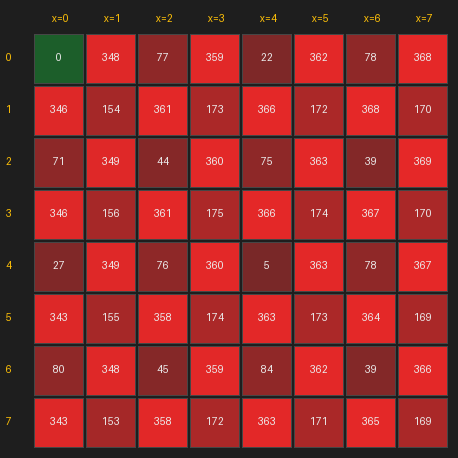
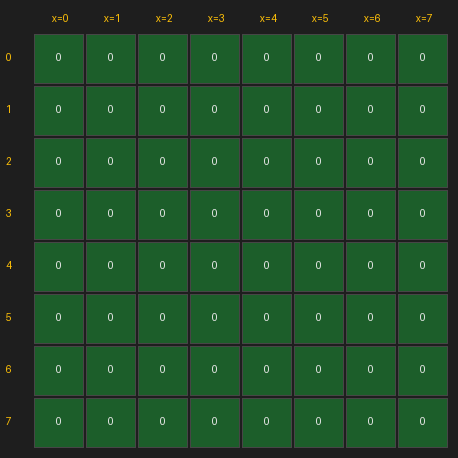
Shape of the defect: every layer origin in an 8x8 window (raster)
Mismatching pixels between a dithered gradient drawn into a
saveLayer at origin (x, y) and the same gradient
drawn directly into the surface. 600 pixels compared per cell.
Layer origin sweep
The raster fix
Carry the device-to-global offset on skcpu::Draw, pass it
into blitter creation, and add it to the coordinates that index the matrix,
so the pattern is anchored to the global pixel grid rather than to each
device.
// after
U32 X = (U32_(dx) + sk_unaligned_load<U32>(iota)) + U32_(ctx->originX),
    Y = U32_(dy) + U32_(ctx->originY);
Three call sites populate it, all guarded by
isPixelAlignedToGlobal(): the plain draw path, the tiler (which
adds the tile origin so large surfaces stay in phase across tiles), and
BDDraw. A device at the origin is unaffected, which is why the
(0, 0) cell was already green.
Raster verification
| check | result |
|---|---|
Gradient (new subtest, layer at 3,5) |
fails without the fix at the first compared pixel
(0xff0e0e0e vs 0xff0d0d0d), passes with it |
dm --src tests --nogpu |
2553 run; 4 pre-existing font failures, identical on unpatched origin/main |
dm --src gm --config 8888 |
1082 GMs, no diffs |
serialize-8888, pic-8888 vias |
gradient / dither / savelayer GMs, no diffs |
The regression test lives in tests/GradientTest.cpp as
test_dither_phase_in_offset_layer, picking a layer origin that
is on neither axis of the grid.
The GPU backends have the same bug
Ganesh (make_dither_effect) and Graphite
(AddDitherBlock) sample the same 8x8 LUT, but index it with
sk_FragCoord, which is render-target-local. A layer is its own
render target, so the phase shifts by the layer origin exactly as it did on
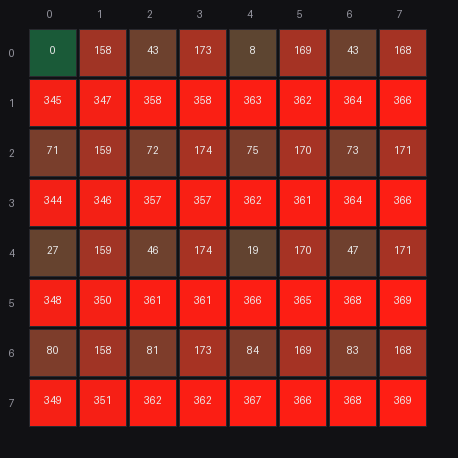
the CPU. Running the same 8x8 origin sweep through both backends confirms it.
Ganesh on --config gl: 63 of 64 origins
disagree with the direct draw, worst case 369 of 600
pixels. Graphite on Vulkan (--config grvk):
63 of 64 origins, worst case 345 of 600
pixels. Both report the identical signature to the raster sweep, down to the
two colors at the first differing pixel.
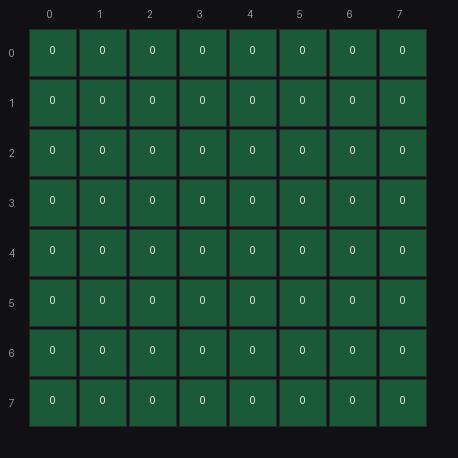
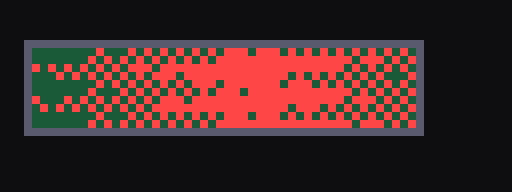
Layer origin sweep, Ganesh GL
The GPU fix mirrors the raster one: carry the device's
isPixelAlignedToGlobal() origin into
SkPaintToGrPaint*, hand it to the dither FP as a uniform, and
add it to the LUT coordinate.
// after
"uniform float2 ditherOrigin;"
"half value = table.eval(sk_FragCoord.xy + ditherOrigin).a - 0.5;"
Ganesh GL, gradient in a layer at (3, 5), 8x magnified

GPU verification
| check | result |
|---|---|
GradientDitherPhaseInOffsetLayer, --config gl |
fails unpatched at the first compared pixel
(0xff0e0e0e vs 0xff0d0d0d), the same values
the raster test reports; passes with the fix |
8x8 origin sweep, --config gl |
63/64 origins bad -> 0/64 |
GradientDitherPhaseInOffsetLayerGraphite,
--config grvk |
fails with the origin neutralized at the same pixel and the same two colors as raster and Ganesh; passes with the fix |
8x8 origin sweep, --config grvk |
63/64 origins bad -> 0/64 |
dm --src gm --config grvk |
188 gradient / dither / savelayer / layer / text / glyph / font / blob GMs, no diffs |
| text, 8x8 origin sweep, both backends | Ganesh 63/64 origins bad (worst 176 of 600 px) -> 0/64; Graphite 63/64 (worst 167) -> 0/64; raster 0/64 throughout |
dm --src gm --config gl |
126 gradient / dither / savelayer / layer / text / blur / image GMs, no diffs |
dm --src tests --config gl |
182 GPU unit tests across Processor, Device, Surface, Image, Gradient, Blend, Shader, Blur, no failures |
The regression test is shared between backends: one comparison helper in
tests/GradientTest.cpp, driven by a raster
DEF_TEST, a DEF_GANESH_TEST_FOR_RENDERING_CONTEXTS
and a DEF_GRAPHITE_TEST_FOR_RENDERING_CONTEXTS. Each one checks
two draws through the same dithered gradient paint: a filled rect and a
string of glyphs.
Text had it too
Adding a glyph draw to the same test found the gap the first pass left
open. Ganesh builds the text paint in AtlasTextOp, which sits
below the device and so had no origin to pass; it was handing the dither
effect a hard-coded zero. The result is the identical defect, and the test
pins it to the same two colors the shape case reports:
text dither phase differs at (5, 5): direct 0xff161616, layer 0xff151515
Both AtlasTextOp::Make call sites originate in
Device, which already knows its origin, so the fix is to plumb
it through SurfaceDrawContext::drawGlyphRunList and into the
paint conversion glyphs already share with every other draw. Graphite needed
no second change: its text goes through the same KeyContext, so
the origin added for shapes covered glyphs as well, which the sweep confirms
rather than assumes.
Raster was correct on text from the start: before the Ganesh fix the one shared test passed on the CPU and failed on the GPU, which is what isolated the backend in the first place.
| backend | text, before | text, after |
|---|---|---|
| raster | 0/64 origins bad | 0/64 |
| Ganesh GL | 63/64, worst 176 of 600 px | 0/64 |
| Graphite Vulkan | 63/64, worst 167 of 600 px | 0/64 |
Notes on this machine
Three failure sets show up here and none of them belong to the change.
Long sequential runs segfault in SkRuntimeBlender_Ganesh, a test
unrelated to dithering, alongside two SkSLTest cases under
llvmpipe; rebuilding the tree one commit back reproduces the same crash, in
the same test, with the same four failures. The Android precompile goldens
fail identically with and without the change across three runs each, because
the canned Android pipeline labels do not match this desktop Vulkan driver.
FontMgr_MatchFamilyStyle and TextBlob_builder fail
for want of system fonts, including under --nogpu, where none of
this code runs. Setting those aside, a 2632-test GPU run is clean.
How Chromium surfaced it
background-clip: text paints the background into a
transparency layer and masks it with the text via DstIn. The
layer starts at the pixel-snapped background rect, so the clipped text
dithered out of phase with an equivalent plain block and
background-gradient-interpolation-003.html exceeded its fuzzy
allowance.
| build | text clip vs reference blocks, 800x600 capture |
|---|---|
| before | 16,120 pixels, each off by one level |
| with this fix | 0 (captures byte-identical, matching sha256) |
The initial Chromium proposal instead enlarged the layer to start on the dither grid, which leaked an 8x8 Skia detail into Blink paint code and changed the clip. With the phase fixed in Skia that change is unnecessary and the WPT passes at its upstream fuzzy value.
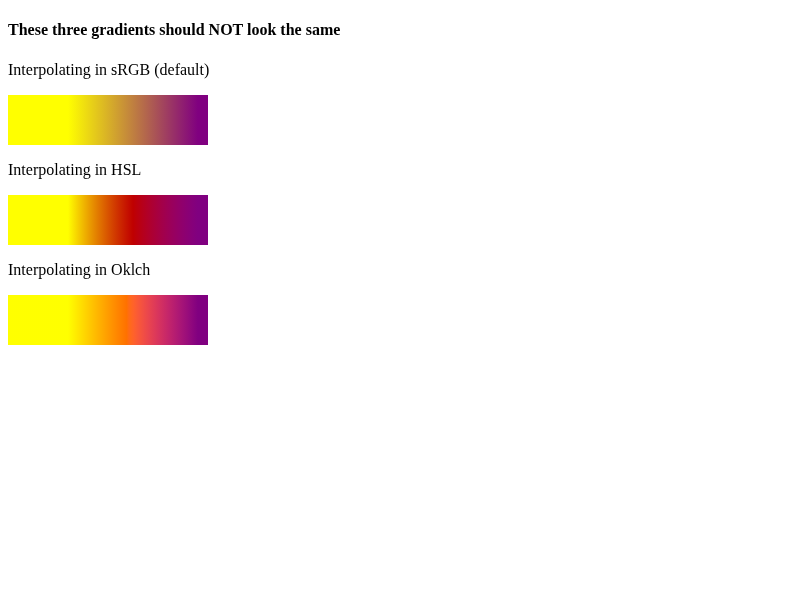
WPT difference masks (magenta = differing pixel)
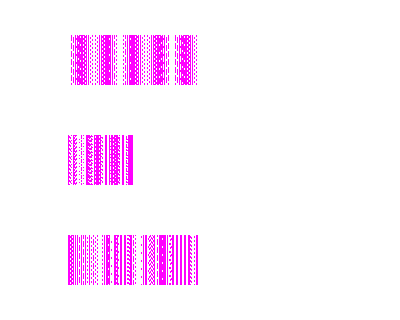


background-clip: text, rendered by your browser. The error
was 1/255 per channel, so it was never visible to the eye - only to a
pixel comparison.Full captures
Unscaled 800x600 content_shell captures behind the masks above.
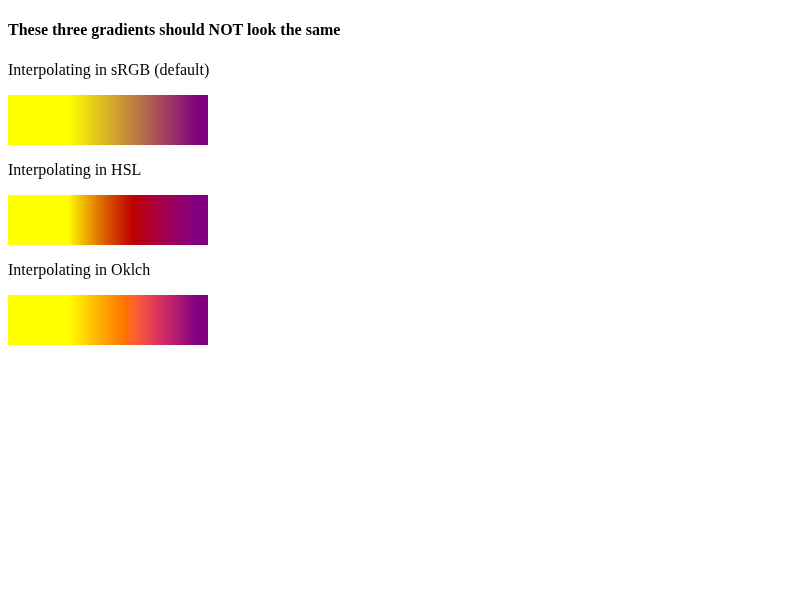
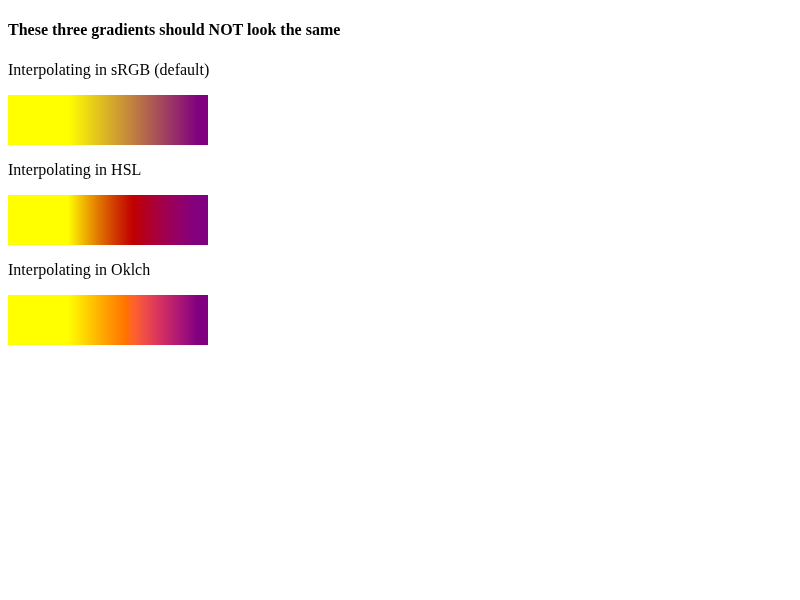


The clip and reference captures with the fix applied are byte-identical,
so one file stands for both
(sha256 e551e22cabeaac...).