renderer killed when an OffscreenCanvas is transferred to another process
What happens
A page calls transferControlToOffscreen() and posts the
canvas to a document on another site, so the receiver lives in a different
renderer process. The canvas carries the frame sink ids of the sending
process. When the receiver draws, it asks viz for that frame sink, the
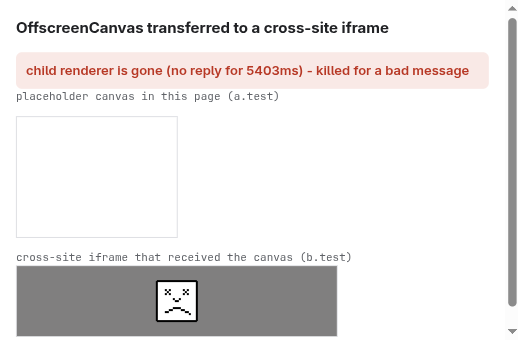
browser sees a client id that does not belong to this renderer, and kills it
with RESULT_CODE_KILLED_BAD_MESSAGE ("Invalid client ID").
The fix drops the foreign ids while deserializing, so the canvas becomes a standalone one. Nothing reaches the sender's placeholder canvas -- it never could -- but no renderer dies. Reported in 2022, and again in 2026 as #471204157; the CL carries the tests from both investigations.
Repro
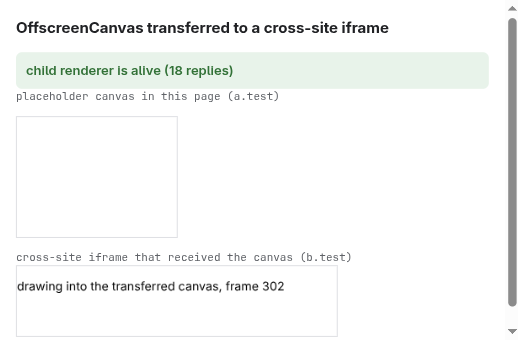
The screenshots come from hjanuschka/cl-8626307-offscreencanvas. The page pings the cross-site iframe every 300ms and shows whether it still answers.
python3 serve.py &
chrome --host-resolver-rules="MAP * 127.0.0.1" http://a.test:8765/parent.html
Cross-site transfer, same build with and without the fix
Verification
OffscreenCanvasCrossProcessBrowserTest.CrossSiteTransferDoesNotKillRendererdrives the same flow between two sites and fails with"RenderFrame deleted."when the fix is compiled out.V8ScriptValueSerializerTest.TransferOffscreenCanvasFromAnotherProcesspins the deserializer: foreign ids come back as a standalone canvas.TransferOffscreenCanvasSameProcesspins the other direction: matching ids keep the placeholder link.fast/canvas/offscreen-frame-transfer.htmlguards the normal same-process transfer at the web level.- All
V8ScriptValueSerializerTestandOffscreenCanvasunit tests pass (124).
Open questions for review
- Silently degrading to a standalone canvas means the sender's placeholder never updates and nothing is reported to either side. An alternative would be to fail the transfer loudly, but that changes a currently "working" postMessage into an exception.
- The fix adds
Platform::GetFrameSinkClientId()just to compare ids. The alternative is reading the client id out of a throwawayGenerateFrameSinkId(), which burns a sink id per transfer.